
spectres of future dogs
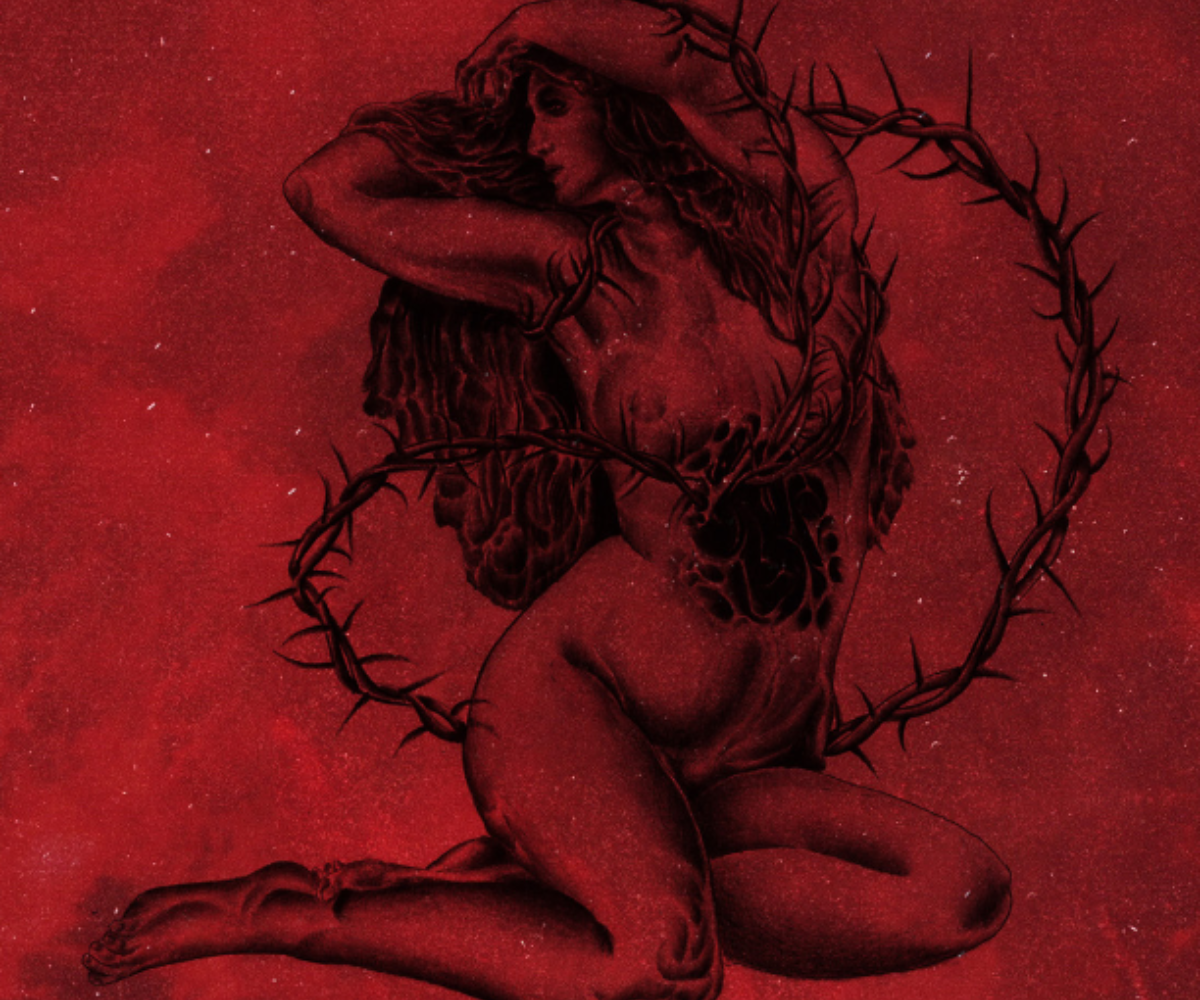
Here are 5 pieces recently published in the brave and inclusive Bloodlust Issue 2. They start on page 118. Bloodlust is a young publication that welcomes some of what formal poetry can threaten to anesthetize out, which I talk about down below. These are pieces I began mostly 5+ years ago that finally made it to the surface.
I wanted to try and place these pieces with them because I want my work to breathe, and shake, and mess, smear, and have blood in them again.
My beloved friend was over recently, we were processing some fear and grief together. She is a magical, gifted poet, and the poetry community is how we met.
More than 10 years ago she came to a class I was giving at Literary Arts about writing the natural world, in anticipation of the release of the book I edited. We knew each other immediately, recognition from past lives. Meeting her again was a reunion. In many lives I have cackled knowingly with her in a corner.
Everything she does is intentional, a sacrament and offering. She moves in a shadowed, soft power that ripples an undercurrent. Her core is gently, intricately tatted.
She asked me to read these poems aloud while she was lying down on the couch in the late grey day. In doing so, I realized these pieces are a curious cross section of how I used to write, how I now write, and how I'm beginning to write.
In preparing and submitting these I realized how much my pattern is to write quickly and edit slowly, often over years. Grad school, while making me a more aware and technical writer, also made me a stilted, self-conscious writer, and I've spent ten years in that place. I'm rarely inspired, and when I am, I feel painted in by the awareness of the audience and construction.
I worked with poet Matthew Dickman briefly,when he was just about to be as famous as a poet could get. We worked in the same dept in the aughts at the Whole Foods downtown, me a wine buyer and and him a cheese monger.
When it was quiet before the end of the day we would sometimes stand wrapping cheese together. His first book had just come out. I hadn't even applied to grad school yet. I was a starving, compulsive writer for years by then, waking up at 10, writing til 3 then rolling to work.
We would rip off a piece of the wax lined paper and write exquisite corpses on the opposite side. We'd talk about poetry. He said the fact that I wrote so much and never published was like an actor who rehearsed a play but never put it on. Which is correct. But I've never written for others, always for me first. I want it to please me.
I have so much writing. It's stashed in dozens of places. I'd start an online journal because it was anonymous and invariably become friends with my readers and community, so I'd start a new one, and so on. I blame it on Saturn in the third, Mercury conjunct sun in the 8th at the critical degree.
The work that I do share I either love and will die on a hill for, or it does something I personally like enough that I don't care if it's misunderstood.
The best feeling when writing is when you are so far into channeling/flow state, that your speaker does something you never could have expected.
My mentor, John Beer, once told me the secret is to write the worst things. Make them embarrassingly honest and cringe-y. You can always shape it later but that's what you have to have, the vulnerable and nerve-hitting truth. I've largely lost that, due to the toll of awareness; a self-consciousness that isn't so much presence of audience as it is toxic perfectionism.
All I wanted to do when I was little was create. I can always recall the feeling of my hands wanting to make something, with paint or yarn or clay. And we were never allowed to at all because it was messy, and our mom was severe, terrifying, undiagnosed, and severely ocd.
Once I actually got a sort of craft item I had asked for, a toy called Magic Sand (hilarious in retrospect because my moon and Jupiter are in Pisces). It came in a plastic sort of genii bottle with a pointed tip. It was sort of like a sand for painting in water, and it would come out of water dry. I wanted to use it to make abstract cities.
I was allowed to use it once, for brief minutes. To use it, my mom put a glass baking pan filled with about an inch with water on a baking sheet on top of a spread out beach towel on the aspirin white kitchen table. Of course, despite being small, I worked my hardest to not drop a grain and never splash any water out of fear. It didn't mater. After that short time I never saw it again.
That sort of lived reality left me with writing. Pencil and paper were allowed. My sister gave me a blank journal at age 12, an introduction that, with no hyperbole, saved my life many times over.
Now, the writing has become neat. Clean. Tidy. John Beer used to say I had so much torque, but I haven't felt that, mostly, in many years. A couple of these poems do. A couple of these poems I allowed outside, their bra straps and thigh highs showing. It's weird to do and be aware of it, making some very obvious turns without apology.
It's a problem that's three-fold, dismantling toxic perfectionism and early programming, liminal health that pervades, and lack of inspiration.
I've never been one to write about the mundane very well. While I'm observational, I'm interested in internal and spiritual and psychic and physical liminality and alchemy, and how they show up in the body and life.
In recent years I've replaced that penchant with instead writing from the space of dream and the numinous, not caring how defamiliarized that can make the work. I'd rather leave a reader with feelings that are unsettling and mercurial, a blurred pastiche of image and sound, than a tidy poem about domestic life that ends with a quippy soft slap.
I think it's important to remember that the speaker of the poem is not necessarily the writer. In fact, it's safer to assume it's not. If the writer is forced to be the voice, then the poem is doomed to limitation and cliche. It's something I've had to remind myself recently, when I think too much on behalf of the audience and the speaker, instead of allowing them the freedom to explore and show up and create their own relationship to the words.